
Opening
About forty minutes into Ramayana (2026), there’s a quiet but telling moment: the film pauses—not for action, not for spectacle, but for reverence. No dialogue rushes in to explain what you should feel. No dramatic score shoves emotion down your throat. It simply lets the weight of the story exist. And that’s when it becomes clear this film isn’t trying to compete with modern blockbusters on volume alone. It’s trying to do something riskier.
The real question, then, isn’t whether Ramayana is ambitious. It clearly is. The question is more uncomfortable: can a myth this sacred, this culturally loaded, be translated into modern cinema without turning into either hollow spectacle or untouchable museum art?
Quick facts
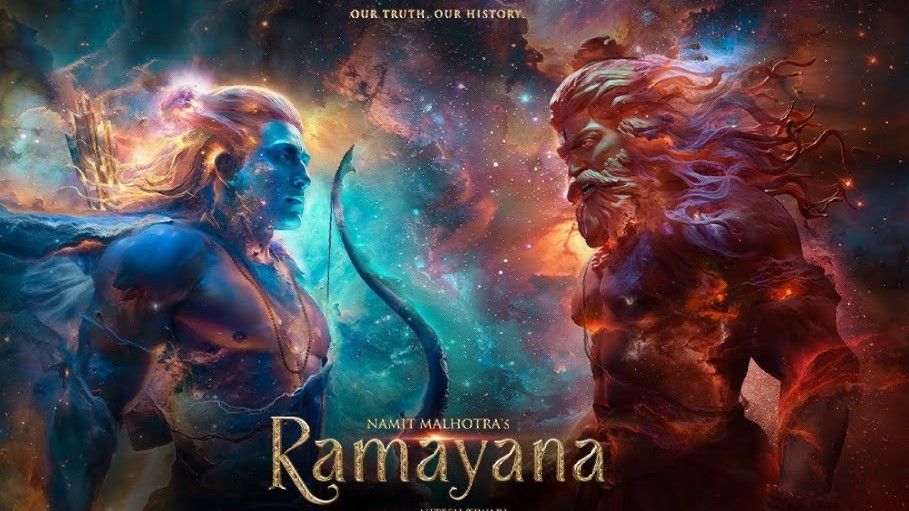
Ramayana (2026) is a mythological epic rooted in action and fantasy, directed by Nitesh Tiwari, bringing one of the most foundational stories in Indian culture to a global cinematic scale. The film stars Ranbir Kapoor as Rama, Sai Pallavi as Sita, Yash as Ravana, and Sunny Deol in a pivotal supporting role. With a runtime stretching close to three hours, the film positions itself not as casual entertainment, but as a deliberate retelling of a story that has survived centuries.
Plot overview (no spoilers)
The film follows Prince Rama, a figure defined as much by restraint as by strength, whose life is shaped by duty, exile, and moral obligation. When Sita, his wife, is taken by Ravana—the powerful and intellectually formidable ruler of Lanka—the story moves from personal loss to cosmic confrontation.
Rather than rushing toward war, Ramayana spends time establishing values: loyalty, honor, sacrifice, and the cost of righteousness. Allies are forged not through convenience, but through shared belief in a moral order that transcends individual desire.
The central conflict isn’t simply about rescuing Sita or defeating Ravana. It’s about opposing worldviews—discipline versus indulgence, responsibility versus ego—and the uneasy truth that righteousness often demands suffering before victory.
Analysis & critique
Story & pacing
This is where Ramayana immediately separates itself from modern franchise filmmaking. The story is not in a hurry, and it refuses to be. Tiwari treats the narrative like a river, not a race—flowing steadily, sometimes slowly, but always with direction.
For viewers unfamiliar with the epic, the first act may feel dense. The film assumes a level of patience and attention that many blockbusters no longer demand. But this density isn’t clutter; it’s intention. Every relationship, every oath, every decision is given space to matter.
That said, the middle section does test endurance. Certain sequences linger longer than necessary, especially when reiterating Rama’s moral clarity. The film’s devotion to its source material occasionally results in repetition rather than progression.
The final act, however, rewards that patience. Conflict escalates with emotional weight rather than chaos, and when spectacle arrives, it feels earned—not decorative.
Performances
Ranbir Kapoor delivers one of the most restrained performances of his career. His Rama is not fiery or charismatic in a conventional sense. He is composed, deliberate, and often emotionally internalized. This choice will divide audiences—but it’s thematically consistent. Rama is not meant to dominate scenes; he’s meant to embody principle.
Sai Pallavi’s Sita is a quiet revelation. She brings strength without defiance, dignity without fragility. Her presence anchors the film emotionally, especially in moments of isolation and moral testing. She isn’t written as a symbol—she’s treated as a person bearing impossible expectations.
Yash’s Ravana is the film’s most dynamic force. He plays the role not as a monster, but as a towering intellect undone by pride. There’s charisma, menace, and tragic self-belief in his performance, making Ravana less a villain to be crushed and more a warning to be understood.
Supporting roles largely serve the narrative rather than competing for attention, which suits the film’s tone.
Visual style & cinematography
Visually, Ramayana walks a careful line between grandeur and restraint. The film avoids the glossy artificiality that plagues many CGI-heavy epics. Color palettes are earthy, symbolic, and regionally grounded—forests feel alive, palaces feel imposing, and battlefields feel consequential rather than ornamental.
The cinematography favors scale through composition rather than constant motion. Wide frames emphasize destiny and distance, while close-ups are used sparingly, reserved for moments of emotional reckoning.
Visual effects are present, but rarely indulgent. When mythic elements appear, they feel integrated into the world, not layered on top of it. That cohesion is one of the film’s quiet triumphs.
Music & sound
The score leans heavily on traditional instrumentation blended with orchestral weight. Music is used ceremonially rather than emotionally manipulative. It elevates moments of devotion and tension without overwhelming them.
Sound design is disciplined. Silence is allowed to exist, especially during moments of loss or contemplation. When battles erupt, the soundscape emphasizes impact and scale, but never collapses into noise.
This is a film that understands restraint as a form of respect.
Themes & meaning
At its heart, Ramayana is about dharma—duty not as obligation, but as moral alignment. The film doesn’t modernize this concept into something more comfortable or ambiguous. Instead, it asks the audience to sit with its difficulty.
The story argues that righteousness is rarely rewarded immediately, that virtue often looks like loss before it looks like triumph. This is not a power fantasy. It’s a meditation on restraint, sacrifice, and consequence.
The film’s weakness is also here. It does not interrogate its moral framework—it asserts it. For viewers seeking reinterpretation or subversion, this approach may feel rigid. But for a story rooted in tradition, that rigidity is arguably the point.
Strengths and weaknesses
Ramayana’s greatest strength is its sincerity. It treats its source material with gravity rather than irony, ambition rather than fear. Performances are disciplined, visuals are cohesive, and the narrative is confident in its pacing.
Its weaknesses lie in accessibility. The film demands patience, cultural openness, and emotional engagement without constant payoff. Some repetition could have been trimmed without diluting meaning, and newcomers may struggle with the film’s refusal to simplify.
Compared to modern mythological adaptations, Ramayana feels less flashy—but far more grounded.
Who is this movie for?
This film is for viewers who value epic storytelling rooted in philosophy rather than spectacle alone. If you appreciate slow-burn narratives, moral clarity, and myth treated with seriousness, Ramayana will resonate deeply.
If you’re looking for rapid-fire action, modern quips, or revisionist takes, this may feel distant or demanding. And if patience isn’t your strength, the runtime will test it.
Final verdict
The honest review of Ramayana (2026) is this: it’s a bold, reverent adaptation that chooses conviction over convenience. It doesn’t chase modern trends or dilute its message to please everyone.
Is Ramayana (2026) worth watching?
Yes—if you’re willing to meet it with attention, respect, and patience. This is not a film that entertains you into belief. It asks you to sit with belief itself.
Score: ?/10
In an era obsessed with reinvention, Ramayana reminds us that some stories endure not because they change—but because they refuse to.