.jpg)
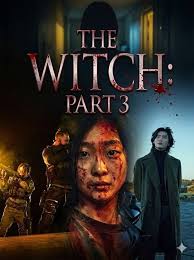
About an hour into The Witch: Part 3, there’s a quiet, almost uncomfortable stretch where the film stops trying to impress you. No explosive violence. No flashy powers. Just silence, tension, and the uneasy feeling that whatever this story has been building toward is finally ready to turn inward. That’s when it becomes clear: this isn’t a sequel trying to go bigger. It’s one trying to close a wound it helped create.
If you’ve followed this trilogy from the start, you already know the question isn’t whether The Witch: Part 3 is brutal or stylish enough. The real question is whether it has anything left to say — or if it’s just stretching a cult hit past its natural breaking point.
Quick facts
The Witch: Part 3 is the concluding chapter of Park Hoon-jung’s South Korean action-thriller trilogy, blending sci-fi, psychological horror, and hyper-violent action. Directed once again by Park, the film centers on Kim Da-mi’s returning protagonist, alongside key cast members introduced in The Witch: Part 2. With a runtime hovering around two hours, the film positions itself less as a blockbuster and more as a character-driven endgame, wrapping up a story that began as a mysterious genre experiment and evolved into something much darker and more personal.
Plot overview (no spoilers)
The film picks up in the aftermath of chaos. The world now knows more than it should, the experiment is no longer contained, and the characters who survived previous installments are scattered, broken, and hunted — sometimes by enemies, sometimes by their own pasts.
At its core, The Witch: Part 3 focuses on identity. The central conflict is no longer about escape or survival, but about ownership: who controls power, who pays for its existence, and whether the protagonist is still a person or just the final product of a system designed to erase choice.
The story unfolds deliberately, revealing information through confrontations rather than exposition dumps, and slowly steering everything toward a confrontation that feels less like a battle and more like a reckoning.
Analysis & critique
Story & pacing
This is where Part 3 takes its biggest risk — and largely pulls it off.
Unlike The Witch and Part 2, which balanced mystery with sudden bursts of violence, this final chapter is more restrained. The script isn’t interested in constantly escalating action. Instead, it digs into consequence. Characters are haunted by decisions made years earlier, and the film takes its time letting that weight sink in.
The pacing is uneven by mainstream standards but intentional. The first half moves slowly, almost defiantly so. Some viewers will call it dragging. Others will recognize it as necessary decompression after two films built on shock and momentum. The middle act occasionally feels too sparse, relying heavily on mood and implication rather than forward motion.
Where it succeeds is focus. The narrative knows exactly whose story it’s telling — and whose stories no longer matter. By the final act, everything converges cleanly. There are no last-minute twists for shock value, just a grim, inevitable progression toward an ending that feels earned, not engineered.
Performances
Kim Da-mi carries this film, and she does it without theatrics. Her performance is quieter than before, stripped of the wide-eyed innocence of the first film and the raw volatility of the second. What’s left is something colder, more controlled — and more tragic.
She doesn’t play the character as a superhero or a monster. She plays her as someone who has learned exactly how dangerous she is and no longer finds comfort in it. That restraint makes the explosive moments hit harder when they finally arrive.
The supporting cast is solid but intentionally subdued. Several characters introduced in Part 2 are given more emotional texture here, though not all are fully developed. A few feel like narrative tools rather than people — functional, but forgettable.
The antagonistic presence, however, is effective not because of screen time, but because of ideology. The film understands that the true villain isn’t a single person, but a system that refuses to die quietly.
Visual style & cinematography
Visually, The Witch: Part 3 is colder and more grounded than its predecessors. The color palette leans toward muted blues, grays, and sickly whites, reinforcing the film’s emotional numbness. Gone are the stylized flourishes of earlier action scenes; what remains is precision.
Camera work is restrained but confident. Long static shots are used to build dread, while sudden handheld movements punctuate moments of violence. The film doesn’t glamorize its brutality — it presents it bluntly, sometimes uncomfortably so.
When the action comes, it’s clean and vicious. No unnecessary slow motion. No indulgent choreography. Every movement feels purposeful, like violence as a last resort rather than spectacle.
Music & sound
The score is minimal and effective. Music rarely leads emotion; it follows it. Long stretches of silence are broken by low, almost imperceptible tones that creep in rather than announce themselves.
Sound design is one of the film’s quiet strengths. Footsteps, breathing, and environmental noise are emphasized, grounding the story in physical reality even when the subject matter veers into the superhuman.
Importantly, the film avoids emotional manipulation. It trusts the audience to feel without being told how.
Themes & meaning
At its heart, The Witch: Part 3 is about agency — or the lack of it.
The trilogy has always flirted with questions of control and exploitation, but this final chapter confronts them directly. The film asks whether survival is enough if it costs identity, and whether destroying the system that created you also destroys what little humanity you have left.
Does it answer those questions definitively? No. And that’s intentional. The film isn’t interested in clean moral resolutions. It’s interested in aftermath — in what remains after violence, revenge, and escape are no longer options.
It’s a bleak worldview, but an honest one.
Strengths and weaknesses
The greatest strength of The Witch: Part 3 is its confidence. It refuses to chase trends, refuses to over-explain, and refuses to turn its protagonist into a crowd-pleasing icon. It commits to being a conclusion, even if that means leaving some threads deliberately unresolved.
Its weaknesses stem from the same place. The slow pacing will alienate viewers expecting wall-to-wall action. Some supporting characters feel underwritten, and a few emotional beats could have landed harder with more development.
Compared to Part 2, this film is less exciting — but more meaningful. Compared to the original The Witch, it’s heavier, darker, and far less playful.
Who is this movie for?
This film is for viewers who’ve followed the trilogy closely and care more about thematic closure than spectacle. If you appreciated the psychological tension and moral ambiguity of the first film, Part 3 will resonate.
If you’re only here for high-octane action and shocking twists, this may feel restrained to the point of frustration. This is not a crowd-pleasing finale. It’s a contemplative one.
Final verdict
The Witch: Part 3 doesn’t try to outdo what came before. It dismantles it.
It’s a cold, deliberate, and sometimes uncomfortable ending to a trilogy that was never meant to be comforting. Not every choice will satisfy every fan, but the film earns respect by staying true to its core ideas rather than softening them for applause.
Some stories don’t end with triumph. They end with understanding — and the courage to stop running.