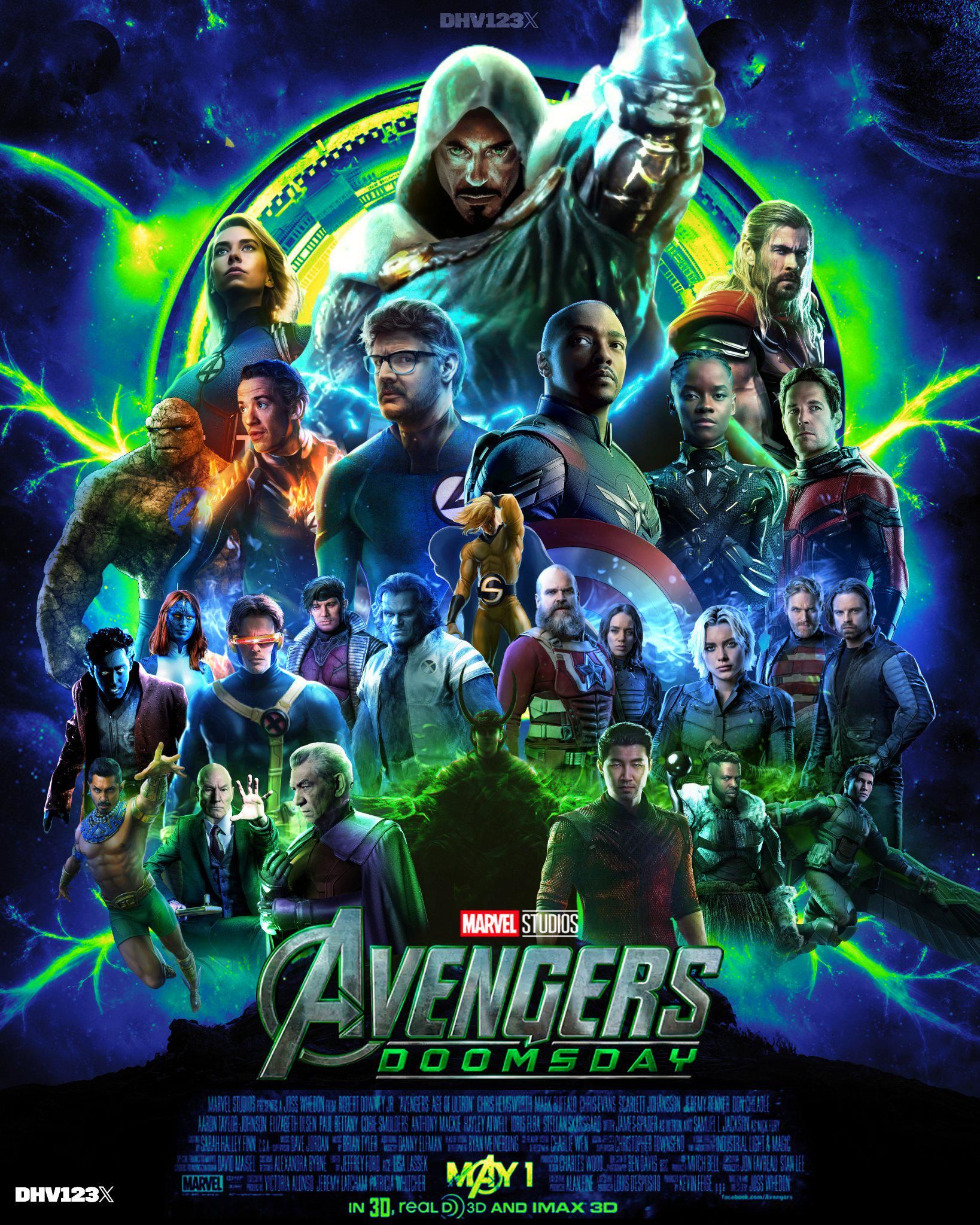
Review: Avengers: Doomsday
Opening
About an hour into Avengers: Doomsday, there’s a strange, quiet realization that creeps in. Not confusion. Not boredom. Something more unsettling: familiarity. You’re watching gods, geniuses, and super-soldiers argue about the fate of reality itself—and yet, none of it feels particularly urgent. The explosions are louder than ever, the stakes are technically higher than ever, but the tension? That’s another story.
So here’s the uncomfortable question worth asking upfront: after everything Marvel has already blown up, undone, reset, and resurrected, does Avengers: Doomsday actually have anything new to say—or is it just better at pretending it does?
Quick facts
Avengers: Doomsday is a large-scale superhero spectacle rooted in action and science fiction, directed by a familiar Marvel veteran who knows the house style inside out. The cast blends legacy Avengers with newer faces introduced after Endgame, aiming to bridge nostalgia with a sense of forward momentum. Clocking in at well over two and a half hours, the film is clearly designed as an “event” movie—big, heavy, and meant to feel important.
Plot overview (no spoilers)
The story unfolds in a world that looks saved on the surface but fractured underneath. The Avengers, no longer a unified symbol, are scattered—physically, morally, and ideologically. A looming threat emerges that isn’t just about destruction, but about permanence. This time, there’s no reset button promised, no easy undo.
The core conflict forces the heroes to confront a difficult idea: that their past victories may have built the very conditions for the current disaster. Saving the world isn’t the real question anymore. Deciding how to save it—and what must be sacrificed in the process—is where the tension lives.
That’s the setup. The film spends most of its runtime exploring how different characters respond to that pressure, before funneling everything toward an inevitable collision between ideals, egos, and brute force.
Analysis & critique
Story & pacing
At a conceptual level, Avengers: Doomsday is aiming higher than many recent Marvel entries. It wants to be about consequence. About the exhaustion of endless heroics. About what happens when even superheroes start doubting the value of their own mythology.
The problem is that the script doesn’t fully trust those ideas. Instead of letting them simmer, it keeps interrupting itself. Scenes that should deepen character conflict are often followed by detours—subplots that feel included because the franchise demands them, not because the story needs them.
Pacing is the film’s biggest enemy. The first act is focused and purposeful, laying emotional groundwork with surprising restraint. The second act, however, sprawls. Conversations repeat the same moral dilemmas with slightly different wording, as if the movie is afraid the audience might forget what it’s “about.” By the time the third act arrives, the film overcorrects—sprinting through major developments that deserved more breathing room.
The result is a movie that feels heavy without always feeling meaningful. Long doesn’t automatically mean deep, and Doomsday sometimes confuses the two.
Performances
The returning, long-established characters are the film’s emotional backbone. These actors have lived with their roles long enough to convey fatigue, regret, and stubborn hope with minimal effort. Their best moments aren’t the speeches—they’re the silences, the looks that suggest years of off-screen history.
The newer cast members are more uneven. A few manage to carve out distinct identities, bringing grounded energy and a welcome sense of vulnerability. Others are clearly victims of the script, reduced to functions rather than people. They’re present because the universe needs them to be, not because the story has figured out who they are yet.
No one outright embarrasses themselves, but there’s a noticeable gap between characters who feel lived-in and those who still feel like placeholders for future movies.
Visual style & cinematography
Visually, Avengers: Doomsday is polished to a fault. The color palette leans heavily into muted tones—grays, blues, washed-out metallics—mirroring the film’s somber mood. That works thematically, but it also makes many action sequences blur together.
The camera prioritizes clarity and scale over personality. You always know what’s happening, but you rarely feel surprised by how it’s shown. There are a handful of striking images—wide shots that emphasize isolation or the weight of impossible choices—but they’re islands in a sea of competent familiarity.
Nothing looks bad. Very little looks bold.
Music & sound
The score understands Marvel’s emotional playbook a little too well. It swells when you’re supposed to feel something, drops out when a line needs emphasis, and returns on cue for heroic resolve. It’s effective, but also transparent.
In quieter moments, the music steps back and allows tension to build naturally. During major set pieces, however, the sound design becomes overwhelming, leaning hard on volume to manufacture intensity. When everything is loud, nothing feels urgent.
It’s not manipulative enough to ruin scenes—but it does occasionally feel like the film doesn’t trust its own drama to land without sonic reinforcement.
Themes & meaning
Thematically, Avengers: Doomsday wants to interrogate heroism itself. It asks whether saving the world over and over again has become a kind of arrogance. Whether power, even when used with good intentions, inevitably creates collateral damage that can’t be ignored forever.
These are strong ideas. Necessary ones, even.
But the film stops short of fully committing to them. Whenever a conclusion starts to feel genuinely uncomfortable, the story pulls back toward safer ground. The message lands, but softly. The movie wants credit for asking hard questions without always being willing to live with the answers.
It’s thoughtful—but cautiously so.
Strengths and weaknesses
The film’s greatest strength is its ambition. It clearly wants to move the Avengers narrative beyond simple spectacle and into something more reflective. The performances from veteran characters give the story emotional weight, and when the movie slows down, it finds moments of genuine resonance.
Its weaknesses lie in excess and restraint happening at the same time. The script is overloaded yet hesitant. The pacing drags, then rushes. The visuals impress without inspiring. Compared to earlier Avengers films—or even sharper superhero ensemble movies outside the MCU—Doomsday feels less like a turning point and more like a careful course correction.
It’s a good movie trapped inside a franchise that’s afraid to let it be great—or truly risky.
Who is this movie for?
If you’re deeply invested in the Marvel universe and still emotionally attached to these characters, Avengers: Doomsday will give you enough to chew on. It rewards long-term viewers and offers glimpses of a more mature direction for the franchise.
If you’re already burned out on superhero epics, or hoping for a radical reinvention rather than an evolution, this may feel like more of the same—just heavier and longer.
Final verdict
So, the honest review of Avengers: Doomsday comes down to this: it’s a solid, occasionally compelling blockbuster that struggles under the weight of its own history. It wants to matter. Sometimes it does. Sometimes it just looks like it does.
Is Avengers: Doomsday worth watching?
Yes—if you’re still invested in the Avengers and curious about where Marvel is steering this universe next. Just don’t expect the apocalypse to feel as dangerous as the title promises.
Score: 7/10
When even the end of the world starts to feel familiar, maybe the real question isn’t how the Avengers save it—but how many times we’re willing to watch them try.