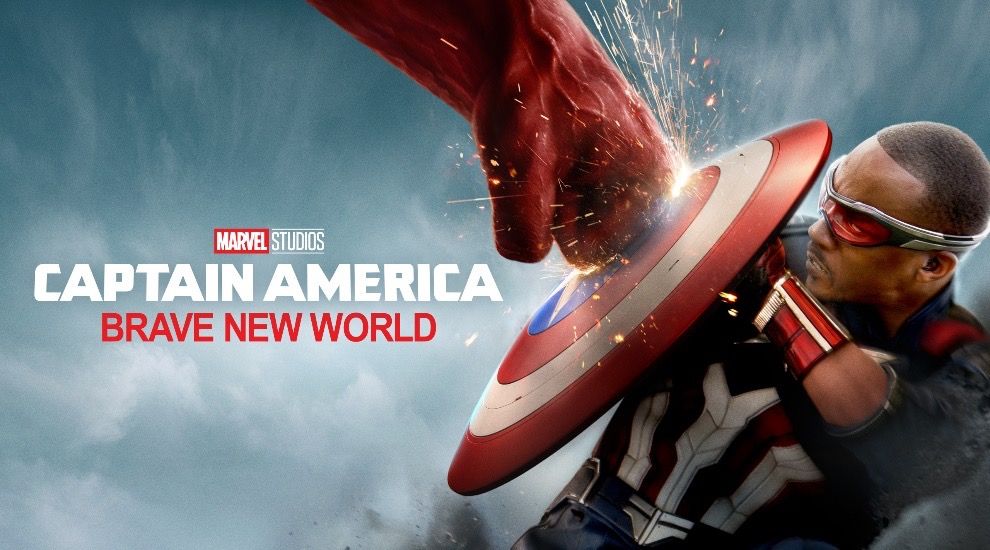
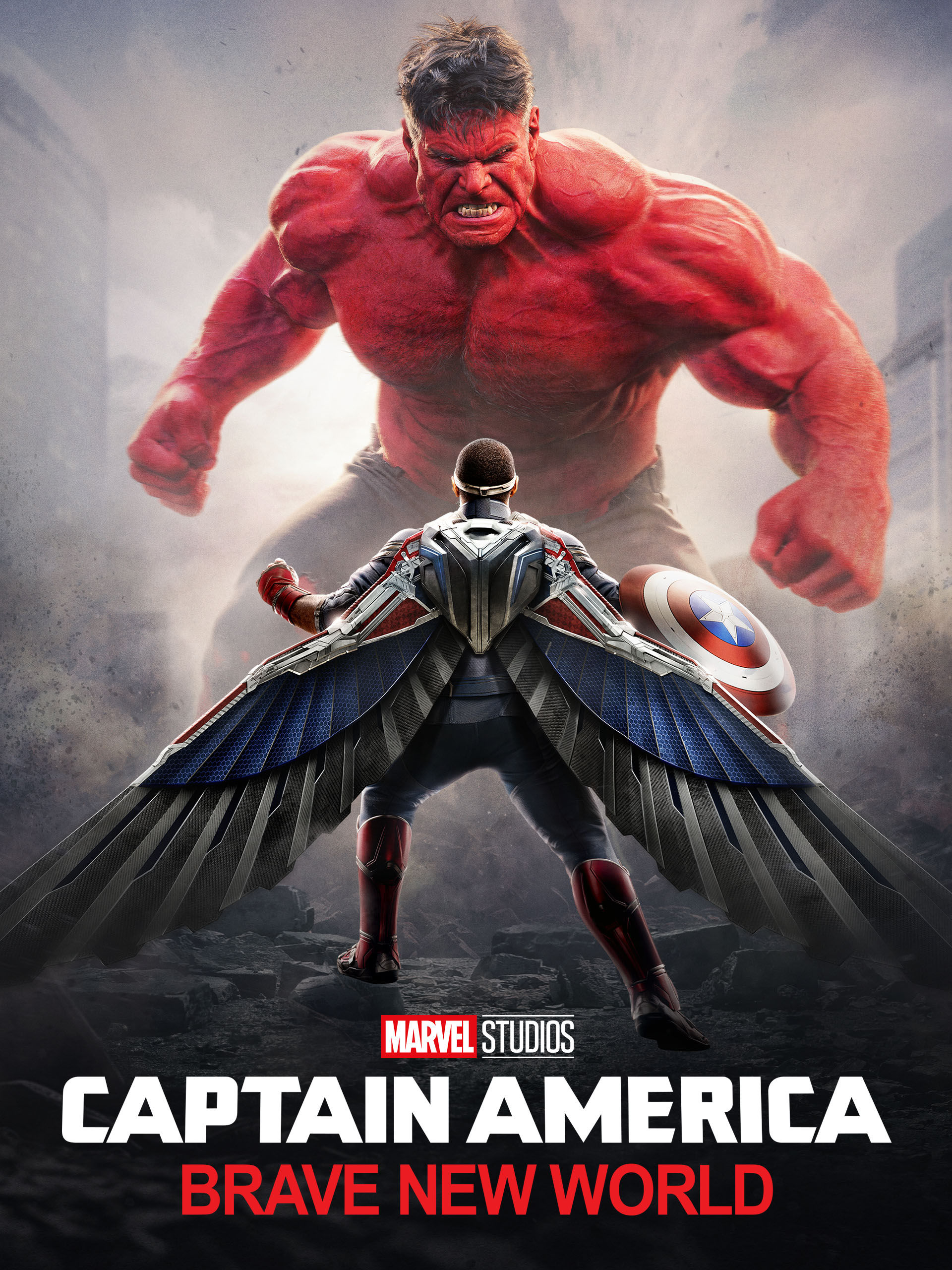
About halfway through Captain America: Brave New World, there’s a quiet realization that hits harder than any action sequence: this movie isn’t struggling to introduce a new Captain America — it’s struggling to justify why this chapter exists at all. Not because Sam Wilson doesn’t deserve the shield, but because the film itself never fully commits to what kind of story it wants to tell with him holding it.
This isn’t a disaster. It’s something more frustrating: a film that has the pieces for relevance, tension, and thematic weight, yet keeps sanding down its sharpest edges until it feels oddly cautious.
The question isn’t whether Sam Wilson works as Captain America. He does. The question is whether Brave New World knows what it wants to say about the world he’s meant to represent.
Quick facts
Captain America: Brave New World is a Marvel Studios superhero film and the first theatrical Captain America entry led by Anthony Mackie as Sam Wilson. Directed by Julius Onah, the film blends political thriller elements with standard MCU action spectacle. The cast includes Anthony Mackie, Harrison Ford (as President Thaddeus Ross), Danny Ramirez, and Liv Tyler. With a runtime pushing past two hours, the film positions itself as a grounded, geopolitical story rather than a cosmic spectacle.
Plot overview (no spoilers)
Set in a world reshaped by global instability, shifting alliances, and unresolved power vacuums, the film follows Sam Wilson as he navigates his role as Captain America amid rising political tensions. A controversial international crisis places the shield at the center of a conflict that is as much about perception and control as it is about physical threat.
As Sam becomes entangled in a web of government interests, hidden agendas, and emerging dangers, he’s forced to confront the limits of diplomacy, symbolism, and heroism in a world that no longer believes in simple answers.
The film frames its conflict less as good versus evil and more as competing visions of order — at least in theory.
Analysis & critique Story & pacing
The screenplay clearly wants to echo the paranoid thrillers of The Winter Soldier, but it never quite matches that film’s narrative confidence. The setup is strong, the stakes are global, and the political implications are obvious — yet the story repeatedly pulls its punches.
The pacing is uneven. The first act spends considerable time establishing context and tension, only for the middle portion to stall under exposition and familiar MCU beats. When the film finally accelerates, it does so mechanically rather than organically, ticking boxes instead of escalating consequence.
There are moments where the story flirts with genuinely uncomfortable questions about power, nationalism, and accountability — and then immediately retreats to safer ground. The result is a film that gestures at complexity without fully embracing it.
Performances
Anthony Mackie carries the film with a grounded, human performance. His Sam Wilson is thoughtful, burdened, and visibly aware of the weight he carries — not just as a hero, but as a symbol. Mackie doesn’t play him as a replacement Steve Rogers, and that distinction remains the film’s strongest asset.
Harrison Ford brings a stern, unpredictable edge to President Ross, injecting scenes with tension even when the script hesitates. His presence elevates otherwise straightforward dialogue, though the character’s arc feels constrained by narrative convenience.
Danny Ramirez provides energy and likability, functioning as both support and contrast to Sam’s restraint. Other supporting characters are serviceable, but rarely given room to leave a lasting impression.
No one is miscast here — but few are truly unleashed.
Visual style & action
Visually, Brave New World favors realism over spectacle. The action is grounded, tactical, and occasionally tense, especially in close-quarters sequences that emphasize vulnerability rather than dominance.
That said, the film struggles with visual identity. Much of it feels functional rather than expressive — cleanly shot, competently edited, but rarely memorable. Set pieces are effective in the moment but fade quickly from memory.
The use of Sam’s flight-based combat remains a highlight, reinforcing his uniqueness as Captain America. Still, the film rarely pushes this advantage into truly inventive territory.
Music & sound
The score is restrained, often blending into the background rather than driving emotion. It supports scenes without elevating them, opting for subtle tension over iconic themes.
Sound design is solid, especially during action sequences, but lacks moments that feel sonically distinctive. Everything works — nothing lingers.
Themes & meaning
At its core, Brave New World wants to explore what Captain America means in a fractured, distrustful world. Sam Wilson’s struggle isn’t about strength — it’s about legitimacy, perception, and moral authority.
The film touches on themes of institutional power, political manipulation, and symbolic responsibility. Unfortunately, it rarely interrogates them deeply. These ideas are presented, acknowledged, and then neatly sidestepped to maintain franchise comfort.
There’s a sharper, more challenging film buried here — one that isn’t afraid to unsettle its audience. This version chooses reassurance instead.
Strengths and weaknesses
The film’s greatest strength lies in its lead performance and thematic potential. Sam Wilson is a compelling Captain America, and the story has all the ingredients for a thoughtful political thriller.
Its weaknesses stem from hesitation. The narrative avoids committing fully to its political edge, the pacing drags in key sections, and the visual presentation lacks boldness.
Compared to earlier Captain America films, this entry feels more cautious, less urgent — competent, but rarely daring.
Who is this movie for?
This film will appeal to MCU viewers invested in character continuity and grounded superhero storytelling. Fans of Sam Wilson will find reassurance in his portrayal, even if the story around him underdelivers.
Those hoping for a sharp, uncompromising political thriller may leave disappointed. This isn’t a radical reinvention — it’s a careful transition.
Final verdict
Captain America: Brave New World is a solid but restrained chapter in the MCU.
It proves that Sam Wilson can carry the shield — but it stops short of redefining what that shield should stand for in a changing world. The film plays it safe when it could have been bold, thoughtful when it could have been provocative.
Sometimes playing it safe is enough. Sometimes, especially for Captain America, it really isn’t.