There’s a heavy expectation baked into a title like 28 Years Later. Not nostalgia — responsibility. This isn’t just another post-apocalyptic zombie movie. It’s a sequel to a film that redefined how modern audiences perceive infection, collapse, and speed-driven horror. Watching The Bone Temple, you’re constantly aware of that legacy, whether the film wants you to be or not.
And here’s the uncomfortable truth: this movie knows exactly where it comes from. What it’s less certain about is where it’s supposed to go.
Quick facts
28 Years Later: The Bone Temple is a post-apocalyptic horror thriller set decades after the Rage virus first tore through the UK. Directed by Danny Boyle and written by Alex Garland, the film reunites the original creative voices behind 28 Days Later, while introducing a largely new cast shaped by a world that has learned — imperfectly — how to live with the aftermath. The runtime sits in the mid-two-hour range, giving the film space to breathe, but also testing the audience’s patience in quieter stretches.
Plot overview (no spoilers)
The world didn’t reset. It calcified.
The Bone Temple takes place in a Britain that has survived long enough to develop rituals, myths, and power structures around the remnants of infection. Quarantine zones still exist. So do infected populations — altered, diminished, but not erased. Civilization hasn’t returned so much as reorganized itself around permanent trauma.
The story follows a small group drawn toward a rumored sanctuary known as the Bone Temple — a place said to offer protection, purpose, or absolution, depending on who’s telling the story. As they travel through fractured territories, the film slowly reveals how survival has reshaped morality, belief, and violence itself.
The central conflict isn’t about escaping the infected. It’s about what people have built in the years since the world stopped ending.
Analysis & critique
Story & pacing
This film is far more interested in aftermath than outbreak — and that’s a deliberate, risky choice. There’s no frantic opening collapse, no immediate chaos. Instead, the story unfolds slowly, almost cautiously, asking the audience to observe rather than react.
When it works, it’s unsettling in a new way. The horror comes not from sudden violence, but from normalization — the idea that humanity has adapted just enough to tolerate the intolerable. The script allows moments of stillness to stretch, forcing you to sit with unease rather than jump away from it.
But this patience cuts both ways. The pacing is uneven, particularly in the first half, where thematic setup occasionally outweighs narrative momentum. Some scenes linger without deepening character or tension, creating a sense of drift. The film eventually sharpens its focus, but it asks for trust before it fully earns it.
Performances
The performances are grounded and intentionally restrained. No one is playing to genre exaggeration. Fear is internalized. Trauma is quiet. This approach suits the film’s tone, though it means emotional payoffs are subtle rather than explosive.
The central performances are strong without being showy. Characters feel shaped by long-term survival rather than short-term terror. That realism gives the film credibility, but it also creates emotional distance. You understand these people more than you feel them.
Supporting roles are used sparingly and effectively, often representing ideologies rather than fully fleshed personalities — a choice that reinforces the film’s thematic focus, but occasionally flattens individual arcs.
Visual style & cinematography
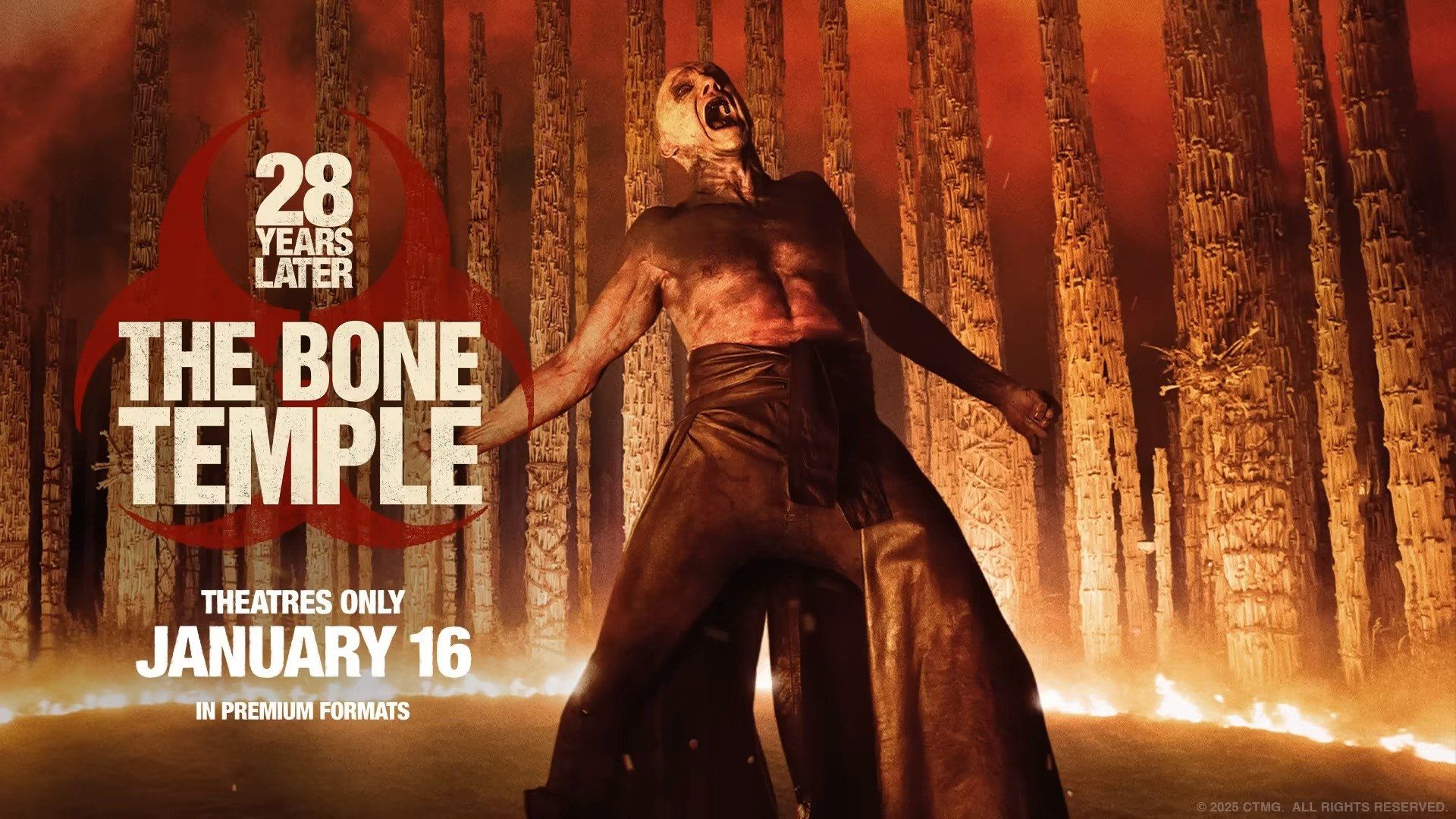
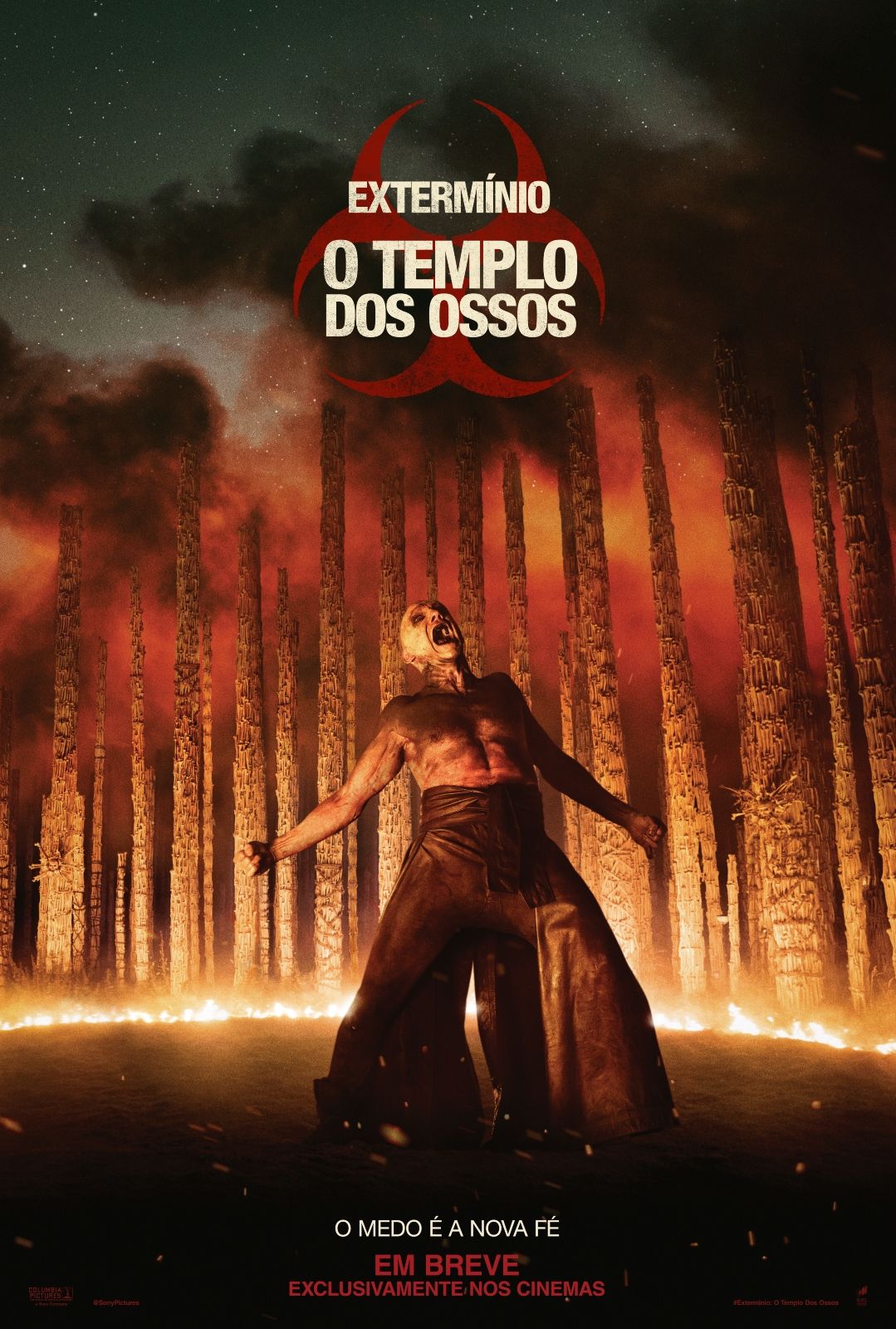
Visually, The Bone Temple is bleak in a way that feels earned. The handheld urgency of 28 Days Later is largely gone, replaced by composed frames and desaturated landscapes that emphasize decay over panic. The camera often holds on ruins, bones, and empty spaces, letting the environment tell the story.
This restraint works in the film’s favor. Violence, when it happens, is abrupt and ugly — never choreographed for spectacle. The infected are less omnipresent but more disturbing, treated as an enduring fact of the world rather than a constant threat.
That said, some viewers may miss the raw kinetic energy of the earlier films. This is not a movie driven by momentum; it’s driven by atmosphere.
Music & sound
The sound design is one of the film’s strongest elements. Long stretches of near-silence amplify tension far more effectively than any jump scare. Environmental sounds — wind, distant movement, structural creaks — become part of the storytelling.
The score is minimal and intentionally abrasive when it appears, echoing the original film’s sonic identity without repeating it outright. It doesn’t guide emotion so much as unsettle it, often arriving at moments where comfort would feel dishonest.
Themes & meaning
This is a film about belief after catastrophe. Not hope — belief. The Bone Temple examines what humans cling to when survival becomes routine and meaning becomes negotiable. Religion, myth, power, and memory all emerge as coping mechanisms — and weapons.
The film also questions whether healing is even possible without forgetting — and whether forgetting would be a betrayal. It suggests that long-term survival may require moral compromises that feel indistinguishable from surrender.
Where the film excels is in refusing easy answers. Where it falters is in emotional accessibility. The ideas are rich, but the film sometimes prioritizes concept over connection.
Strengths and weaknesses
The greatest strength of 28 Years Later: The Bone Temple is its ambition. It doesn’t try to recreate the shock of the original. It accepts that the world has changed — and so should the storytelling. Compared to most zombie sequels that escalate body counts, this one deepens its gaze.
Its weakness lies in restraint that occasionally feels like hesitation. The film is so careful not to sensationalize that it sometimes undercuts its own impact. Certain narrative threads feel underdeveloped, as if the film is more interested in posing questions than exploring their consequences.
Still, this is a thoughtful, serious entry in a genre often allergic to patience.
Who is this movie for?
This film is for viewers who value atmosphere over adrenaline and thematic weight over constant action. If you admired 28 Days Later for its mood and implications — not just its speed — there’s a lot to appreciate here.
If you’re expecting relentless horror or a return to pure survival chaos, this may feel distant or slow. The question “Is 28 Years Later: The Bone Temple worth watching?” depends entirely on whether you’re willing to let the horror seep in gradually rather than explode.
Final verdict
28 Years Later: The Bone Temple isn’t interested in frightening you the way its predecessor did. It wants to unsettle you — to make you think about what survives after survival stops being heroic.
As a review of 28 Years Later: The Bone Temple, the takeaway is clear: this is not a crowd-pleasing sequel, but it is a meaningful one. Flawed, deliberate, and occasionally distant — yet far more honest than most films brave enough to revisit a legacy this heavy.
Some worlds don’t end in fire. They just learn how to live with the bones.