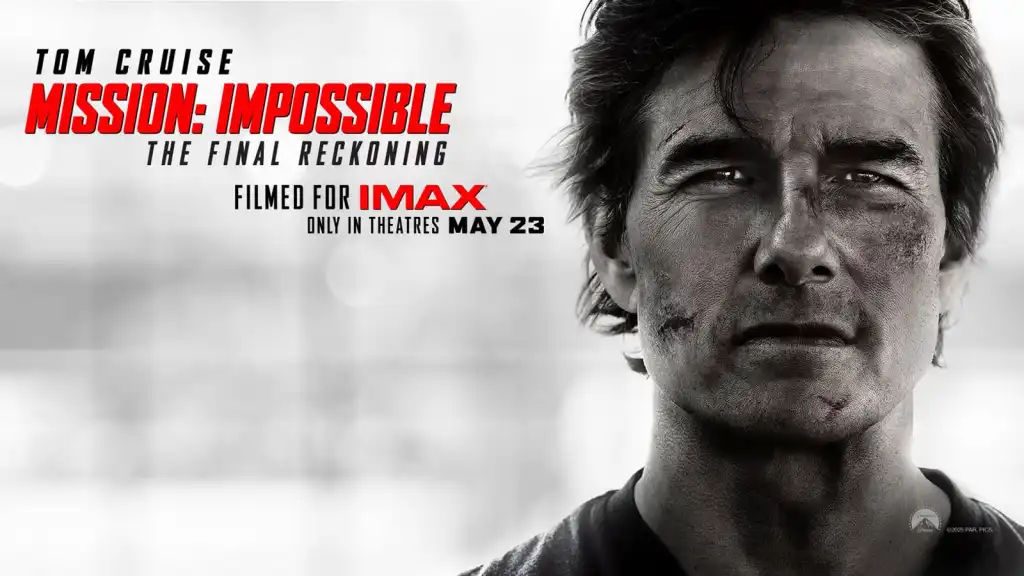
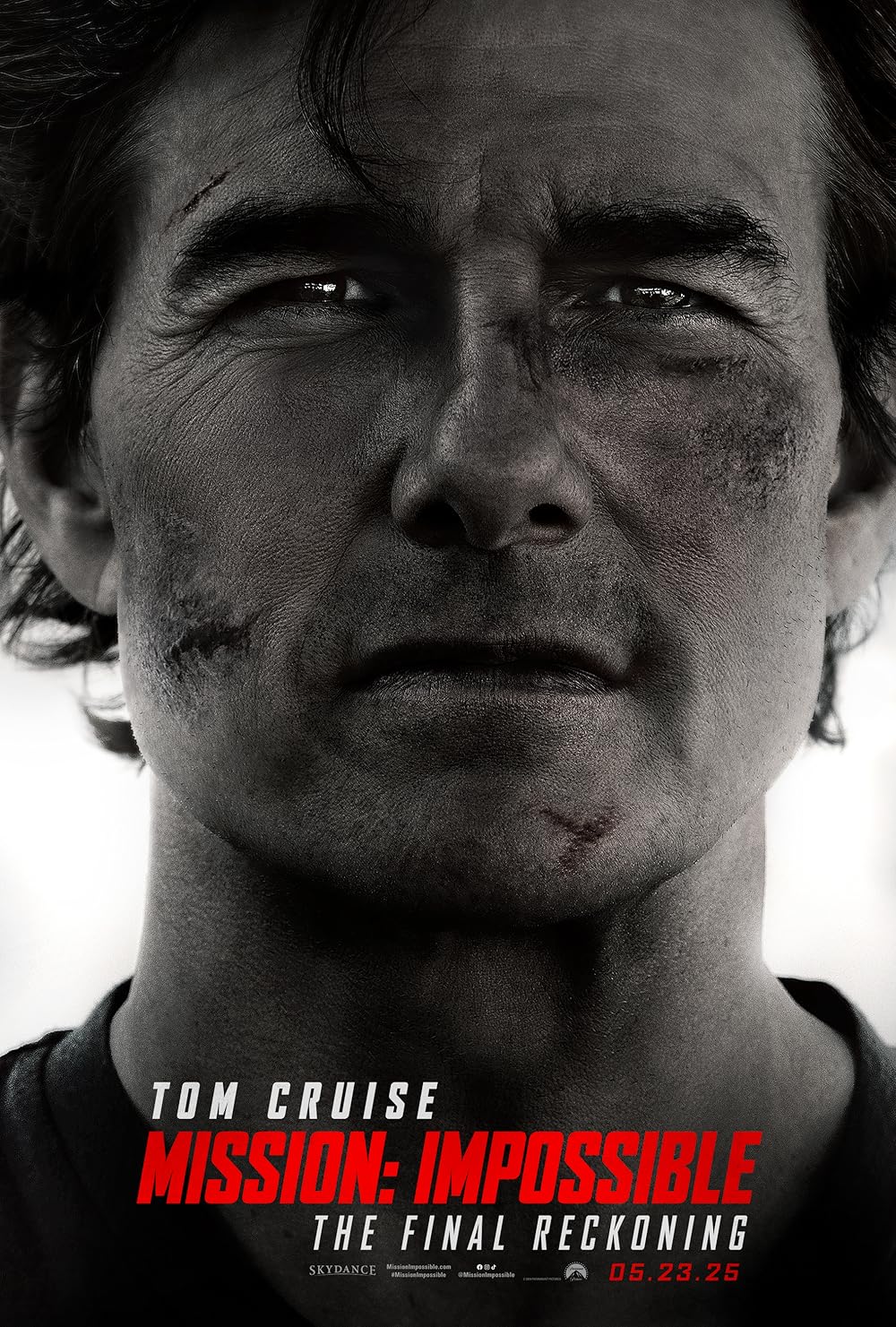
Opening
There’s a specific kind of tension that comes with watching a franchise promise its own ending. Not excitement — suspicion. After nearly three decades of impossible missions, last-second saves, and Tom Cruise sprinting like the world depends on it, Mission: Impossible – The Final Reckoning doesn’t just need to entertain. It needs to justify why it exists at all.
Because if this really is the end, it can’t just go bigger. It has to go deeper. And the real question isn’t whether Ethan Hunt can survive one more mission — it’s whether this franchise knows how to let him stop.
Quick facts
Mission: Impossible – The Final Reckoning is a high-budget action thriller directed by Christopher McQuarrie, continuing his long-running collaboration with Tom Cruise, who once again leads the film as Ethan Hunt. The cast includes returning IMF team members from the previous installments, reinforcing the film’s role as a direct continuation rather than a soft reset. With a runtime pushing close to three hours, this entry positions itself as a culmination — not just another sequel, but a closing chapter to a franchise that has outlived most of its peers.
Plot overview (no spoilers)
Picking up after the fallout of the previous film, The Final Reckoning follows Ethan Hunt and his team as they face the consequences of a threat that was contained, but never truly defeated. This time, the danger isn’t a single villain or a ticking clock — it’s the ripple effect of past decisions finally catching up.
The story shifts the focus from prevention to reckoning. Instead of asking how far Ethan will go to save the world, the film asks a quieter, more uncomfortable question: what happens after you’ve already crossed every line?
Analysis & critique
Story & pacing
This film wants to be about consequence. Not in a vague, dramatic sense — but in a literal one. Every major decision feels like it carries weight from previous entries, and the script clearly aims to reward long-term viewers. When the story works, it feels mature and intentional, as if the franchise is finally looking back at itself instead of always forward.
That ambition comes at a cost. The first act is heavy with setup and thematic signaling, and while it’s thoughtful, it’s not always gripping. There’s a sense of hesitation — like the film is gathering courage before committing to its own ending. The middle section is where things finally click, with strong momentum, clear stakes, and action that feels driven by story rather than obligation.
The final act is effective but not fearless. Some resolutions lean on familiar franchise tricks, and a few moments feel over-explained, as if the film doesn’t fully trust silence or implication. It wants to be definitive, but it also wants to stay safe.
Performances
Tom Cruise delivers one of his most restrained performances as Ethan Hunt. He’s still physically committed — that part hasn’t changed — but emotionally, there’s a noticeable shift. Ethan feels tired. Not broken, not defeated, but worn down by years of carrying responsibility alone. It’s subtle, but it adds credibility to the idea that this might actually be the end.
The supporting cast is solid, though unevenly used. Some characters are given emotional space and agency, while others exist mostly to move the plot forward. No one gives a bad performance, but the script clearly prioritizes theme and momentum over deep character development outside of Ethan himself.
Visual style & cinematography
Visually, The Final Reckoning is clean, controlled, and confident. The action is staged with clarity — you always know where characters are, what they’re trying to do, and what happens if they fail. This franchise understands spatial storytelling better than most modern blockbusters, and that skill is still intact.
That said, not every sequence is visually memorable. Some locations feel functional rather than iconic, serving the action instead of enhancing it. When the film slows down and lets atmosphere take over, it’s far more effective than when it relies on scale alone.
Music & sound
The score leans heavily on familiar themes, sometimes too heavily. Emotional cues are often underlined rather than implied, which can feel slightly manipulative in quieter scenes. When the music pulls back, the tension improves.
Sound design, however, is excellent. Action sequences are impactful without becoming overwhelming, and the film knows when silence can carry more weight than noise.
Themes & meaning
At its core, The Final Reckoning is about the cost of perpetual heroism. The film questions the idea that saving the world over and over again is sustainable — emotionally, morally, or personally. It suggests that being indispensable is another form of isolation.
The film deserves credit for committing to this theme more than previous entries. However, it stops just short of fully confronting its implications. Some ideas are introduced but not pushed far enough, as if the franchise is still negotiating with its own legacy.
Strengths and weaknesses
The film’s greatest strength is its intent. It wants to be more than a spectacle, and often succeeds. The action is still among the best in the genre, but it’s the reflective tone that sets this entry apart. Compared to earlier films like Fallout, which thrived on relentless momentum, The Final Reckoning chooses restraint — sometimes wisely, sometimes hesitantly.
Its main weakness is caution. For a movie that markets itself as an ending, it occasionally feels unwilling to fully close doors. The result is a strong but slightly compromised sense of finality.
Who is this movie for?
This film is made for longtime fans who care about Ethan Hunt as a character, not just a stunt delivery system. If you’ve followed the franchise closely and want emotional payoff alongside action, there’s a lot to appreciate here.
If you’re looking for nonstop adrenaline or a simple entry point, this may feel slow or overly introspective. So, Mission: Impossible - The Final Reckoning worth watching? Yes — if you want more than just explosions.
Final verdict
Mission: Impossible – The Final Reckoning isn’t a perfect ending, but it’s an honest attempt at one. It’s thoughtful, well-crafted, and occasionally held back by its own caution. As a review of Mission: Impossible - The Final Reckoning, the takeaway is clear: this is a franchise finally willing to look inward, even if it’s not entirely ready to let go.
Score: 7.2/10
Not because it goes bigger than before — but because it finally asks whether bigger was ever the point.