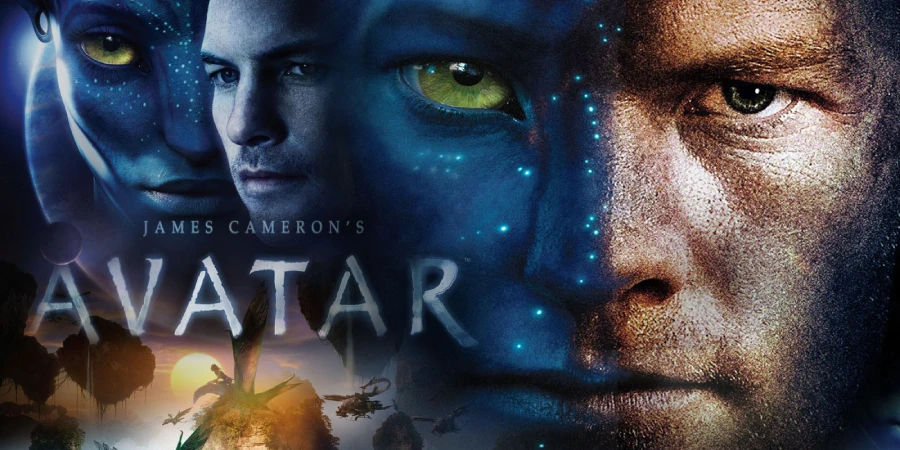

Opening
Rewatching Avatar today feels different than it did in 2009. Back then, it was impossible to ignore—screens flooded with blue, audiences stunned into silence, ticket prices justified by sheer spectacle. Now, stripped of novelty and viewed through years of imitators and diminishing returns, the question changes. Not “how did they do this?” but “what’s actually left when the visual shock wears off?”
Is Avatar still worth watching as a film—or is it just a technological milestone we collectively mistook for a masterpiece?
Quick facts
Released in 2009, Avatar is a sci-fi action epic directed by James Cameron, blending blockbuster spectacle with environmental and colonial themes. The film stars Sam Worthington, Zoe Saldaña, Sigourney Weaver, and Stephen Lang, and runs just under three hours. At the time of release, it pushed motion-capture and 3D filmmaking into the mainstream, becoming a cultural event as much as a movie.
Plot overview (no spoilers)
The story takes place on Pandora, a lush alien moon rich in natural resources and spiritual meaning to its indigenous inhabitants, the Na’vi. Humans arrive not as explorers, but as extractors, bringing military hardware and corporate priorities with them.
At the center is a human outsider who gains access to Pandora through an artificial body—an “avatar”—allowing him to live among the Na’vi. As he integrates into their world, the central conflict sharpens: loyalty versus conscience, profit versus preservation, and whether understanding a culture is the same as respecting it.
The narrative follows a familiar arc, focusing less on surprise and more on immersion—inviting the audience to live inside Pandora long enough to care when it’s threatened.
Analysis & critique
Story & pacing
Let’s get this out of the way: Avatar tells a story you’ve heard before. Colonialism framed as progress. A native culture deemed “primitive” until an outsider recognizes its value. The moral awakening of a protagonist who starts on the wrong side and ends on the right one.
The film doesn’t try to hide this. Cameron isn’t reinventing narrative structure here—he’s refining it. The issue is that refinement sometimes slides into predictability. You can see major beats coming well in advance, and very few story turns challenge expectations.
Pacing, however, is more effective than critics often admit. The first act takes its time establishing Pandora as a living ecosystem, not just a backdrop. The middle section slows deliberately, focusing on cultural immersion rather than plot propulsion. That patience pays off emotionally—but it also tests viewers who value narrative efficiency over atmosphere.
The final act delivers spectacle with conviction, but by then the film has fully committed to its chosen moral lane. There’s no ambiguity left, no lingering doubt. The story knows exactly who’s right and who’s wrong—and it makes sure you do too.
Performances
Sam Worthington’s performance is serviceable but unremarkable. He functions as a narrative conduit rather than a compelling personality, which is arguably intentional. The problem is that when your lead is meant to anchor a three-hour epic, “functional” isn’t quite enough.
Zoe Saldaña, on the other hand, brings emotional texture and physicality that the film desperately needs. Even under layers of motion capture, her performance carries conviction, vulnerability, and presence. She feels like she belongs to Pandora in a way few other characters do.
Sigourney Weaver provides grounded authority, adding credibility to the film’s scientific angle, while Stephen Lang leans hard into archetype. His antagonist is blunt, aggressive, and unapologetically unsubtle. Effective? Yes. Nuanced? Not even close.
Visual style & cinematography
This is where Avatar still commands respect.
Pandora isn’t just visually impressive—it’s cohesive. The color palette, creature design, plant life, and environmental logic all work together to create a world that feels considered rather than randomly assembled. Even now, the film’s visual ambition stands above most CGI-heavy blockbusters.
Cameron’s camera is clear and deliberate. Action scenes prioritize spatial awareness, and the 3D—when viewed properly—enhances depth instead of distracting from it. The visuals don’t just decorate the story; they are the story’s primary argument.
That said, spectacle does a lot of heavy lifting. When stripped of visual wonder, many scenes reveal how thin their dramatic construction really is.
Music & sound
James Horner’s score is sweeping, emotional, and unmistakably epic. It knows when to recede and when to surge, reinforcing both wonder and tragedy without overwhelming the image.
Sound design is immersive and detailed, particularly in environmental sequences. Pandora feels alive because it sounds alive—rustling, breathing, humming with unseen energy. This auditory world-building remains one of the film’s strongest achievements.
Themes & meaning
Avatar wears its themes openly. Environmental destruction, corporate greed, militarized imperialism, and cultural erasure aren’t subtext—they’re the text.
The film’s sincerity is both its strength and its weakness. Cameron believes deeply in what he’s saying, and that conviction gives the movie emotional clarity. But subtlety isn’t part of the package. The message is delivered with a sledgehammer, not a scalpel.
Does the film earn its moral stance? Mostly. But it simplifies complex issues into digestible binaries. Oppressors are cruel and short-sighted. The oppressed are spiritually enlightened and morally pure. Reality is messier than that, and Avatar has little interest in exploring the gray areas.
Strengths and weaknesses
Avatar excels at immersion. Few films invite you into their world so completely or convincingly. Its technical achievements aren’t just impressive—they’re purposeful, serving a coherent vision rather than empty spectacle.
Its weaknesses lie in storytelling and characterization. The plot is derivative, the protagonist underdeveloped, and the moral framework overly tidy. Compared to other sci-fi epics that challenge ideology or narrative form, Avatar feels emotionally sincere but intellectually safe.
It’s a landmark in how movies are made, not necessarily in how stories are told.
Who is this movie for?
If you value world-building, visual spectacle, and immersive cinema, Avatar is still absolutely worth watching—especially on the biggest screen possible.
If you’re looking for sharp dialogue, complex characters, or narrative surprise, this may feel hollow beneath the surface beauty. And if you’ve seen dozens of films that borrowed its DNA, Avatar may now feel more familiar than it once did revolutionary.
Final verdict
The honest review of Avatar (2009) is this: it’s a film powered by vision more than writing, conviction more than nuance. It changed the industry, not because of its story, but because of how completely it realized a world.
Is Avatar worth watching?
Yes—especially if you approach it as a cinematic experience rather than a narrative benchmark. Just don’t confuse technical innovation with storytelling depth.
Score: 8/10
Sometimes a movie doesn’t need to say something new—it just needs to make you see it in a way you’ve never seen before.
Avatar Timeline (click each entry to view details):
- 🌊 2022 → Avatar: The Way of Water
- 🌋 2025 → Avatar: Fire and Ash